

|
Korean Job Discussion Forums
"The Internet's Meeting Place for ESL/EFL Teachers from Around the World!"
|
| View previous topic :: View next topic |
| Author |
Message |
Bulsajo

Joined: 16 Jan 2003
|
 Posted: Wed Apr 05, 2006 1:19 pm Post subject: Posted: Wed Apr 05, 2006 1:19 pm Post subject: |
 |
|
More on the domestic front:
| Quote: |
The promise of a stronger military
The surprise was that more was not made of the promise of "a stronger military" – surprising in the sense that Harper's Conservatives were the first party in years to make increased military spending a central part of its election campaign.
With a deft use of nationalism, Harper talked of sovereignty in the Arctic and the necessity of guaranteeing Canada's role in the North. There would have to be more troops and a lot more capital spending to ensure that the Canadian writ runs up to and past the Arctic islands.
The explanation of the throne speech's near silence on the military may be that in the election campaign, the Conservatives promised an increase of more than $5 billion over five years for the military, an amount that most critics thought was a low estimate.
Perhaps in the cold light of government, Harper wants to forget his enthusiasm for spending so much money, especially since the military is not as keen as the prime minister on Arctic icebreakers and massively expensive transport planes.
However, Harper moved firmly to remove any hint of hesitation about the role of Canadian troops in Afghanistan. New Democrat Leader Jack Layton wants a parliamentary debate about Afghanistan; Harper wants none of it:
"The dedicated Canadians in Afghanistan deserve all of our support as they risk their lives to defend our national interests, combat global terrorism and help the Afghan people make a new start as a free, democratic and peaceful country."
One of the arts of politics is the capacity to craft principles that even your opponents find difficult to oppose, such as when the throne speech talked of Canada's voice in the world: "Advancing our interests in a complex and sometimes dangerous world requires confidence and the independent capacity to defend our country's sovereignty and the security of our citizens." Even Jack Layton would find it hard to disagree with that.
|
http://www.cbc.ca/news/background/realitycheck/20060404gray.html |
|
| Back to top |
|
 |
TheUrbanMyth
Joined: 28 Jan 2003
Location: Retired
|
| Posted: Wed Apr 05, 2006 8:01 pm Post subject: |
|
|
| Bulsajo wrote: |
I'd really like to think differently.
The Soviet mission isn't the Canadian one and the need is great and the justification is solid.
But then you think that this is the country that broke the Red Army, and you have to wonder what a relatively small multinational force can accomplish that a Superpower couldn't...
.) |
Remember that a lot of the locals (the Northern Alliance) are on OUR side though. This was not the case with the Red Army. As long as the Taliban are resurgent, it is a fairly safe bet the Northern Alliance will want the U.S to play some kind of role, even if just air support. With Afghan troops on the ground and U.S. fighters and bombers to back them up, the Taliban insurgency will be much more limited than the one in Iraq, which so far has managed to present serious problems in only three of Iraq's provinces.
Plus there are a number of warlords who see the sense in (albeit limited) co-operation with the U.S. To list just one benefit, greater freedom than say under the Taliban? |
|
| Back to top |
|
|
Bulsajo
Joined: 16 Jan 2003
|
| Posted: Thu Apr 06, 2006 9:13 am Post subject: |
|
|
FWIW, The Red Army had the Afghan government and army on its side. In the end it didn't amount to much, but at the beginning this was not an insignificant fact.
Northern Alliance stopped being of any real significance on Sept 9 or 10th 2001, the day Massoud was assassinated. (This may sound strange, but read on).
It's composed of a variety of groups who have fought each other and other tribal ethnic groups in the past and who would probably do so again at the drop of a hat. It also contains Islamic fundamentalists who were happy to receive money to fight Soviets and were ecstatic to finally get real US support in their civil war (against ethnically Pashtun Taliban, but others before that).
They are situated in the North, obviously, which was the access point of the Soviet Union into Afghanistan, so at that time they played a front lines role.
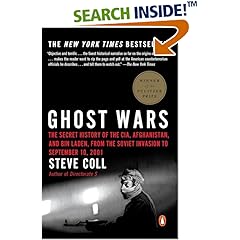
In September 2001 they were the only group on the ground in Afghanistan that the US could link up and make an alliance with, and even then, just barely. If Sept 11 hadn't happened to give them US support thay would have been totally wiped out by the Taliban within a year. (Source: Ghost Wars, Steve Coll).
And now nobody really seems to give much of a shit about the North, or about any Tajik, Kazak, or Turkmen minorities- it's all about the capital, and the Pashtun south (Kandahar) and the Pakistan frontier (Tora Bora etc.).
Anyway, to make a long story short- they're not worth counting as allies.
As for Warlords and tribal leaders in Afghanistan, sure- they'll ally with whoever gives them the best deal.
Always have done, always will.
For how long can the West remain in the position of 'the best deal'?
For a few years, sure.
But afghanistan has basically been in a civil war since the late 70s.
Are the US and Canada/Germany/Italy/France and other ISAF contributors able to make the long term committment to nation-building that is required?
Beats me, and I doubt they really know either.
A truly indispensable book on Afghanistan:
And another (more historic, and more regional):
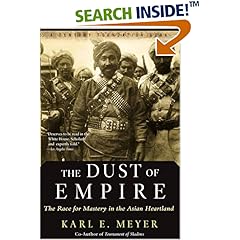
Both can probably be ordered through What The Book. |
|
| Back to top |
|
|
Bulsajo
Joined: 16 Jan 2003
|
| Posted: Thu Apr 06, 2006 12:18 pm Post subject: |
|
|
Update:
CBC News - Tories allow debate on Afghanistan mission
Last Updated Wed, 05 Apr 2006 18:51:15 EDT
CBC News
Prime Minister Stephen Harper has agreed to opposition demands and will allow a debate in the House of Commons about Canada's military role in Afghanistan.
However, there will be no vote on the mission. The discussion is being characterized as a "take-note" debate to allow politicians to express their views. It is set for Monday night.
Foreign Affairs Minister Peter MacKay still doesn't think a vote is needed. (Tom Hanson/ Canadian Press)
Harper had previously rejected a debate on the issue, saying it would undermine the work of soldiers in the field and put troops in danger... |
|
| Back to top |
|
|
TheUrbanMyth
Joined: 28 Jan 2003
Location: Retired
|
| Posted: Sat Apr 08, 2006 6:29 am Post subject: |
|
|
| Bulsajo wrote: |
(1) FWIW, The Red Army had the Afghan government and army on its side. In the end it didn't amount to much, but at the beginning this was not an insignificant fact.
Northern Alliance stopped being of any real significance on Sept 9 or 10th 2001, the day Massoud was assassinated. (This may sound strange, but read on).
(2)It's composed of a variety of groups who have fought each other and other tribal ethnic groups in the past and who would probably do so again at the drop of a hat. It also contains Islamic fundamentalists who were happy to receive money to fight Soviets and were ecstatic to finally get real US support in their civil war (against ethnically Pashtun Taliban, but others before that).
They are situated in the North, obviously, which was the access point of the Soviet Union into Afghanistan, so at that time they played a front lines role.
(3) In September 2001 they were the only group on the ground in Afghanistan that the US could link up and make an alliance with, and even then, just barely. If Sept 11 hadn't happened to give them US support thay would have been totally wiped out by the Taliban within a year. (Source: Ghost Wars, Steve Coll).
And now nobody really seems to give much of a shit about the North, or about any Tajik, Kazak, or Turkmen minorities- it's all about the capital, and the Pashtun south (Kandahar) and the Pakistan frontier (Tora Bora etc.).
(4) Anyway, to make a long story short- they're not worth counting as allies.
(5) As for Warlords and tribal leaders in Afghanistan, sure- they'll ally with whoever gives them the best deal.
Always have done, always will.
For how long can the West remain in the position of 'the best deal'?
For a few years, sure.
(6) But afghanistan has basically been in a civil war since the late 70s.
Are the US and Canada/Germany/Italy/France and other ISAF contributors able to make the long term committment to nation-building that is required?
Beats me, and I doubt they really know either.
A truly indispensable book on Afghanistan:
And another (more historic, and more regional):
Both can probably be ordered through What The Book. |
(numbers are mine)
1. Both of which were (more or less) puppet organizations during the Soviet occupation.
2. True, however given the resurgence of the Taliban, it is likely that most of these groups will stick together to defeat a common foe, they don't want the Taliban back in power, because they know what will happen to them.
3. Again true, but it doesn't take away from the fact that their assistance was helpful.
4. If the Taliban had remained beaten, then maybe yes. As long as the Taliban remain a threat, the Alliance will have to hang together with the West in order to merely survive. They aren't that stupid to cut each other's throats with a common (and more recent) enemy on their doorstep
5. Probably better than any other deal out there.
6. And right now, (in certain parts) it's better than it's been for a long while. There is some progress. |
|
| Back to top |
|
|
Bulsajo
Joined: 16 Jan 2003
|
| Posted: Sat Apr 08, 2006 9:00 am Post subject: |
|
|
| Quote: |
| 1. Both of which were (more or less) puppet organizations during the Soviet occupation. |
Yes, more or less.
My only reason for mentioning it that was that the Soviet position in 1980 probably appeared as overwhelming as the coalition's position does now. Like the rest of my post, I'm just saying that caution should be taken with Afghanistan.
I worry that- similar to Iraq- the West will underestimate the resources required to acheive desired goals.
Then you get more casualties, domestic blowback, etc.
Specific to this, I wouldn't want anyone to overestimate the Northern Alliance and other allies, nor underestimate the taliban and al Qaeda.
This is interesting, especially in light of the case of Abdul Rahman, the Christian convert in Afghanistan:
| Quote: |
| The then Afghan government adopted a political strategy to unite all warring factions that did not recognize the government under the banner of the United Islamic Front for the Salvation of Afghanistan to fight off their common enemy, the Taliban regime that had taken power in Afghanistan. They fought against the Taliban control that had expanded from Kandahar in 1994 to capture most of Afghanistan by September 2001. UIFSA was headquartered in Panjshir. Taliban and the three countries that had recognized their regime: Pakistan, UAE and the Saudi Arabia, referred to the UIF as NA Northern Alliance in order to belittle it. The media has preferred to use NA because they did not want their people to know that the US/UK governments were siding with the Former Mujahedin who were also Moslem fundamentalists. To date the US backed government has not been able to get rid of these former Mujahedin from the government. It was the influence of these Fundamentalist Mujahedin that shaped the Afghan constitution into a modern Islamic constitution with Sharia Law as the central pillar of it. |
Bear in mind the source is Wikipedia, so I don't think there is any way to tell who actually wrote which parts of it, and when? Maybe Mithridates knows a way...
But anyway, are our allies really our allies?
And if so, for how much longer?
We both seem to generally agree, but of course nobody knows how long it will take to 'stabilize' Afghanistan.
If there is going to be a debate on Afghanistan in Canada- as the Conservatives have now agreed to- I think these are the sorts of things that should highlighted so that everyone has a grasp of what's going on and what may come.
Ignorance is the danger here, especially on the home front. |
|
| Back to top |
|
|
Summer Wine
Joined: 20 Mar 2005
Location: Next to a River
|
| Posted: Sat Apr 08, 2006 11:20 am Post subject: |
|
|
| Quote: |
My only reason for mentioning it that was that the Soviet position in 1980 probably appeared as overwhelming as the coalition's position does now. Like the rest of my post, I'm just saying that caution should be taken with Afghanistan.
|
I was once told an interesting point that may have some truth to it or not, who really knows nowdays. It was that prior to the afghan invasion by the soviet union, they were facing a small famine due to failed wheat crops, the US globably brought options on all wheat to be sold in a bid to bring influence on the soviet union. Very shortly afterwards, the soviet union invaded afghanistan and the whole game changed, with america's bid for impact on russia being undercut by a whole new crisis and threat against US positions in south asia.
I wasn't in a position to know at that time, so cant comment, though it would seem possible and wouldn't surprise me in the least. |
|
| Back to top |
|
|
Bulsajo
Joined: 16 Jan 2003
|
| Posted: Sun Apr 09, 2006 5:21 pm Post subject: |
|
|
Canadians divided on Afghan mission, poll suggests
Last Updated Sun, 09 Apr 2006 18:43:54 EDT
CBC News
Canadians are nearly evenly divided on whether it was a good idea to send domestic troops to Afghanistan and how long they should stay there, a new survey suggests.
The survey by Decima Research found 46 per cent of respondents considered the deployment a good idea, while 45 per cent said it was bad.
Forty-three per cent of those surveyed in the poll released Sunday said Canadian troops should be brought home within the next year.
Another 25 per cent said the troops should stay as long as it takes to complete the mission, 15 per cent drew the line at five years and 10 per cent said they should stay another year or two.
The survey results were provided to the Canadian Press.
The online poll of 2,131 people was conducted between March 31 and April 4. A random sample of this size is considered accurate plus or minus 2.2 percentage points, 19 times out of 20.
The survey was released on Sunday, the day before Parliament was due to debate the Afghan mission.
Prime Minister Stephen Harper has already declared, on a recent visit to Afghanistan, that his Conservative government will never "cut and run" from the military mission that began under the previous Liberal administration.
http://www.cbc.ca/story/world/national/2006/04/09/decima-060409.html?ref=rss |
|
| Back to top |
|
|
catman

Joined: 18 Jul 2004
|
| Posted: Mon Apr 10, 2006 3:08 am Post subject: |
|
|
| There is talk about troops going to the Darfur region in the near future. Since things aren't going to quite down in Afgahnistan any time soon I'm worried about the military being stretched too thin. |
|
| Back to top |
|
|
laogaiguk

Joined: 06 Dec 2005
Location: somewhere in Korea
|
| Posted: Mon Apr 10, 2006 4:28 am Post subject: |
|
|
| catman wrote: |
| There is talk about troops going to the Darfur region in the near future. Since things aren't going to quite down in Afgahnistan any time soon I'm worried about the military being stretched too thin. |
I fricken love your avatar  |
|
| Back to top |
|
|
Bulsajo
Joined: 16 Jan 2003
|
| Posted: Mon Apr 10, 2006 6:34 pm Post subject: |
|
|
MPs debate Canada's role in Afghanistan
JOHN WARD
Canadian Press
Ottawa — Fighting terrorists in Afghanistan is better than waiting until they show up in Vancouver, Montreal or Ottawa, Defence Minister Gordon O'Connor told the Commons on Monday.
��Canada is in Afghanistan because it is in our national interest,�� he said. ��Our security begins very far from our borders.��
MPs debated Canada's role in Afghanistan amid growing casualty lists, blood-curdling threats from terrorists and polls which suggest Canadians are divided on the mission.
The ��take-note�� debate was more of a discussion than an actual debate, with no party opposed to the deployment and no vote held.
Liberal Leader Bill Graham, who led a similar House debate on the topic last November, said he saw it as ��an opportunity for the Canadian people to better understand this mission.��
A small group of peace protesters on Parliament Hill Monday demanded an immediate withdrawal from the southwest Asian country. One called the Commons debate ��an absolute sham.��
NDP Leader Jack Layton, who admits Canada is committed to Afghanistan until next February at least, said the debate posed key questions:
—What is Canada's role?
—How long will it take?
—How is victory to be defined?
The new Conservative government had tried to fend off calls for a debate, saying it wasn't needed and would only serve to hurt morale among the troops.
But Prime Minister Stephen Harper reversed himself abruptly last week and scheduled the debate.
Liberal Defence critic Ujjal Dosanjh said he thinks that happened because recent polls have shown faltering support for the mission, especially as it has drifted far from peacekeeping and into open warfare.
He commended Mr. Harper for holding the debate.
Mr. Layton said Canadians incorrectly thought the mission was one of traditional peacekeeping and have been taken aback by recent gun battles between Canadians and Taliban forces.
Terror attacks against civilians as well as foreign and Afghani troops are now routine. Afghani authorities say domestic insurgents have been reinforced from outside the country, with Iraqi-style suicide attacks growing in numbers.
A survey published by Decima Research last weekend suggested an even split among respondents when asked if Canadian troops should be in Afghanistan.
Neither Mr. Harper nor Bloc Leader Gilles Duceppe took part in the debate. A spokesman for Mr. Harper said the Prime Minister made his support for the mission clear while visiting Afghanistan last month.
��You would really think that on something of this magnitude and importance that the Prime Minister would be here,�� Mr. Layton said.
Peace activists, who want Canada out, have denounced the operation as nothing more than a branch of U.S. President George W. Bush's war on terror.
However, non-governmental groups are more supportive, recognizing that aid workers need protection in a country that is slumping into chaos.
Canada has been deeply involved in Afghanistan since February 2002, when a battle group went in to co-operate with American and other coalition forces in rooting out Taliban holdouts. In August 2003, Canadian troops moved into Kabul as part of an international stability force.
Last fall, Canadians set up shop in the troubled southern city of Kandahar, where they have since found themselves attacked by suicide bombers and roadside booby traps and fighting rural skirmishes with militants holdouts.
During the various missions, 11 Canadian soldiers and a diplomat have been killed.
Last weekend, Afghani insurgents threatened more mayhem.
In an interview with The Canadian Press, insurgent spokesman Qari Yuosaf Ahmedi said the Taliban are convinced the resolve of the Canadian people is weak and that public support will sag as suicide attacks and roadside blasts increase.
��We think that when we kill enough Canadians they will quit war and return home,�� he said.
Monday's Commons debate was a sign of that weakness, he added.
Claude Bachand of the Bloc Québécois scoffed at that comment.
��I think this is a sign of the health of our democracy as opposed to a dictatorship with the Taliban,�� Mr. Bachand said.
Canada is ostensibly in Afghanistan as part of a NATO operation, although in practical terms the mission is under an American umbrella. Washington provides much of the clout — including helicopters and other key support — for the entire deployment.
Afghanistan remains a dysfunctional country. Hamid Karzai was elected president in the fall of 2004 in a vote made possible only by the presence of thousands of foreign soldiers.
Mr. Karzai's power barely reaches the Kabul city limits and even within he is protected by foreign bayonets. The outlying regions are run by warlords or have descended into outright anarchy benefiting only the bandits and opium farmers. |
|
| Back to top |
|
|
Bulsajo
Joined: 16 Jan 2003
|
| Posted: Tue Apr 11, 2006 9:30 am Post subject: |
|
|
A view of the House of Commons debate from Washington:
In Canada, A Cautious Debate on Afghan Role
By Doug Struck
Washington Post Foreign Service
Tuesday, April 11, 2006; Page A16
TORONTO, April 10 -- Canadian lawmakers joined Monday in a show of patriotic support for the nation's troops in Afghanistan, tiptoeing around public opinion polls that show deep division over the increase in the force there and distrust of involvement with the U.S. military operations.
Canada's first open parliamentary debate on Afghanistan, which the government had feared would undercut backing for the military's growing role, turned instead into a parade of support for Canada's efforts.
In a prelude to the unusual session, Prime Minister Stephen Harper pledged that the Canadian force in Afghanistan, which has grown to 2,200, "will be there in some form for the next few years." He declined to promise to bring the issue to a parliamentary vote.
Since Canada sent troops to Afghanistan in February 2002, 11 soldiers have died. But the danger of the mission has grown as troop levels have risen this year with Canada's planned assumption of command of the 6,000 NATO troops there, and with the move of Canadian troops to the volatile Kandahar region.
Opinion polls have shown the public evenly divided over Canada's presence in Afghanistan. Critics have seized on Canadian antipathy toward U.S. militarism. Dawn Black, a member of the House of Commons from the New Democratic Party, said Canada should avoid operating with the United States, "a country with a demonstrated and recent record of abuse."
"The mission has turned into a counterinsurgency mission. The risks are much higher than we were told," she said on the House floor in Ottawa in Monday's debate.
Although the military commitment was made by the previous Liberal-led government, Harper's Conservative Party advocates a more robust military and closer cooperation with the United States.
"We will stay the course," said Gordon O'Connor, the defense minister. "Canada is in Afghanistan to protect the security and prosperity of Canadians. Our security begins very far from our borders."
Harper, who took office in January, agreed to the debate after concluding that most members of Parliament would publicly support the mission. He got a boost this past weekend when some Canadian papers ran interviews from Afghanistan in which purported Taliban leaders labeled the Canadian will as "weak."
Canadians regularly boast of their reliable presence in U.N. peacekeeping operations, and the Afghanistan mission was largely noncontroversial when it was seen as part of that peacekeeping role. But the Canadian news media this year began sending journalists regularly to Afghanistan, and they reported that troops were doing more fighting than peacekeeping or rebuilding.
Despite the polite show of support on the Commons floor Monday night for Harper's position, nagging questions were raised during the debate.
Experts in international law have told the lawmakers that Canadian soldiers who turn over arrested Taliban insurgents to Afghanistan's government might be indirectly liable for war crimes if those insurgents are tortured by Afghan or U.S. authorities.
Critics said the U.S. record on treatment of prisoners made Canadian soldiers vulnerable and called for an agreement that would prevent insurgents captured by the Canadians from being given over to the Americans. |
|
| Back to top |
|
|
caniff
Joined: 03 Feb 2004
Location: All over the map
|
| Posted: Tue Apr 11, 2006 11:29 am Post subject: |
|
|
This thread initially bored me, then made my eyes glaze over, then made me realize again how much the world is broken. I don't want Canadians fighting in a place that they cannot help change. Same for the Americans. By the barrel of a gun will only worsen the problem in Afghanistan.
Iran? I'm ambivalent about force, although we need to continue the diplomatic pressure. Any suggestions there? (And I think Canada can bow out of that one if it wants. Its politically divisive, and frankly we don't need the help.)
Last edited by caniff on Tue Apr 11, 2006 11:32 am; edited 1 time in total |
|
| Back to top |
|
|
caniff
Joined: 03 Feb 2004
Location: All over the map
|
| Posted: Tue Apr 11, 2006 11:30 am Post subject: |
|
|
| double post |
|
| Back to top |
|
|
igotthisguitar

Joined: 08 Apr 2003
Location: South Korea (Permanent Vacation)
|
| Posted: Mon Dec 18, 2006 8:54 pm Post subject: |
|
|
War Costs NATO Afghan Supporters
By Rachel Morarjee, Correspondent of The Christian Science Monitor
Mon Dec 18, 3:00 AM ET
KANDAHAR, AFGHANISTAN - At a large gathering with Afghan President Hamid Karzai in this southern city last Tuesday, Abdul Ghafar sat among hundreds in the audience, clutching a piece of paper. On it were the names of 20 members of his family killed two months ago in a NATO airstrike.
"This was my uncle's family. Eleven children, six women, and three innocent men were killed. He lost everyone but one small girl," he said. Mr. Ghafar was hoping to receive compensation from the Afghan government. "We got nothing," he said.
http://news.yahoo.com/s/csm/20061218/ts_csm/ostan
Ghafar's extended family in the southern Panjwai district are among the nearly 4,000 people killed since the beginning of 2006 in a Taliban resurgence that is using civilians as human shields against escalating NATO air attacks.
The US-based Human Rights Watch estimates that more than 1,000 of those killed were civilians. A recent spate of suicide bombings here has stoked public anger even further.
The increased violence has left NATO generals begging for more troop contributions from reluctant member nations. Just Sunday, the French defense minister announced plans to withdraw the 200 special forces troops deployed under US command in southeastern Afghanistan.
But with so few boots on the ground, the increased reliance on air power has led to thousands of civilian deaths. The devastating air offenses are undermining support for the Afghan government, say human rights workers and Afghan officials, and are turning public opinion in the four southern provinces of Afghanistan against NATO forces, who took command of the south from the US in August.
The US Air Force dropped 987 bombs between June and November and fired some 146,000 cannon rounds as air support for NATO allies in the south. US aircraft fired more bombs in the first six months of this year than in the first three years of its crusade against the Taliban, according to figures released by the Pentagon.
President Karzai's meeting last Tuesday of NATO and US generals, ambassadors, and Afghan ministers in Kandahar - southern Afghanistan's largest city and a former Taliban stronghold - was an attempt to examine better methods for tackling the insurgency and curbing civilian deaths.
But even as top military officials met, NATO troops posted at a checkpoint in Kandahar shot and killed a local tribal elder who was driving a motorbike. The man had failed to heed warning signals as he drove to the meeting with Karzai.
The Tuesday visit came three days after Karzai wept openly on national television about his helplessness to protect the Afghan people from US, NATO, and Taliban violence.
"We can't prevent the coalition from bombing the terrorists, and our children are dying because of that," he said with tears in his eyes during a speech to mark International Human Rights Day, Dec. 10. At the Kandahar meeting, Karzai saved some of his harshest criticism for his Pakistani neighbors, a country he says has been actively helping the Taliban.
"The problem is not Taliban, we don't see it that way," Karzai told reporters. "The problem is with Pakistan."
"NATO's strategy has eroded support for its mission as well as for Karzai - nothing could be more telling than Karzai weeping and complaining about NATO killing Afghan civilians," says Sam Zia-Zarifi, Asia research director for Human Rights Watch.
"We are extremely worried - it hurts us, it hurts Afghan civilians. We are worried by it, NATO is also worried by it, and we are working together to reduce such casualties," President Karzai told reporters in Kandahar. "We know that is damaging to our image, and more importantly we do not want to harm innocent people."
In contrast to the US, NATO has no unified approach to compensating civilians killed during fighting, instead placing the financial burden on the individual nations engaged in the fiercest fighting in the south: Canada, Britain, the Netherlands, and Romania.
By providing much-needed financial aid for the families of victims killed by airstrikes, the Taliban has been able to garner support in the southern provinces, says Sarah Holewinski of the Campaign for Innocent Victims in Conflict (CIVIC), a Washington-based human rights group.
"If NATO doesn't find a way to win the trust and support of the Afghan people, the Taliban will," she says. "In fact they already are."
Fighting against Taliban insurgents who are dressed in civilian clothes and hidden among the civilian population is a difficult task. But the sharp escalation in violence has many southern Afghans asking whether NATO troops are making their lives safer or, ultimately, more dangerous 
Many Afghans in Kandahar say that they would prefer NATO convoys to avoid the city, because they act as magnets for suicide bombs and the NATO soldiers tend to shoot indiscriminately into crowds.
"When we see a military convoy coming we stop our car and leave it where it is. We run and we hide," says Neamatullah, who fled his village in the nearby Panjwai suburb after NATO airstrikes in May killed dozens of civilians. "Both sides are fighting each other for power," he says. "But our lives and homes are ruined." |
|
| Back to top |
|
|
|
|
You cannot post new topics in this forum
You cannot reply to topics in this forum
You cannot edit your posts in this forum
You cannot delete your posts in this forum
You cannot vote in polls in this forum
|
|


 FAQ
FAQ Search
 Memberlist
 Usergroups
 Register
 Profile
 Log in to check your private messages
 Log in


