

|
Korean Job Discussion Forums
"The Internet's Meeting Place for ESL/EFL Teachers from Around the World!"
|
| View previous topic :: View next topic |
| Author |
Message |
Troll_Bait

Joined: 04 Jan 2006
Location: [T]eaching experience doesn't matter much. -Lee Young-chan (pictured)
|
 Posted: Sun Jun 17, 2007 3:43 pm Post subject: Did Buddha really exist? Posted: Sun Jun 17, 2007 3:43 pm Post subject: Did Buddha really exist? |
 |
|
I bought and read this book:
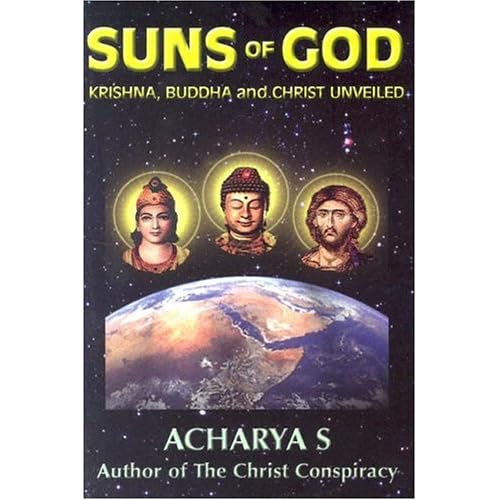
It claims that Buddha never really existed. I'm wondering two things:
1. Does anyone know of other books or websites on this subject?
2. Has anyone else read this book? And if so, what are your thoughts? |
|
| Back to top |
|
 |
Grimalkin

Joined: 22 May 2005
|
| Posted: Mon Jun 18, 2007 3:05 am Post subject: |
|
|
| What does it say about Krishna and Christ? |
|
| Back to top |
|
|
SPINOZA
Joined: 10 Jun 2005
Location: $eoul
|
| Posted: Mon Jun 18, 2007 3:27 am Post subject: |
|
|
| Quote: |
| Did Buddha really exist? |
Did he balls.
Seriously - all these supposedly educated folks on here who believe all this tripe, you should be - at best - cleansed. |
|
| Back to top |
|
|
Troll_Bait
Joined: 04 Jan 2006
Location: [T]eaching experience doesn't matter much. -Lee Young-chan (pictured)
|
| Posted: Mon Jun 18, 2007 3:52 am Post subject: |
|
|
| Quote: |
| What does it say about Krishna and Christ? |
As you might have guessed from the book's cover, the author claims that all three never really existed as real, flesh-and-blood people, and were instead originally solar deities.
The notion that Jesus never existed has been debated before here at Dave's several times already.
I'd like to know if anyone knows of any evidence of a historical Buddha (or lack thereof).
Spinoza:
Your reply is kind of garbled. Something about cleasing your balls? |
|
| Back to top |
|
|
Grimalkin
Joined: 22 May 2005
|
| Posted: Mon Jun 18, 2007 4:07 am Post subject: |
|
|
That is as I'd have guessed! 
For me I don't think the existence or non existense of Christ Or Buddha (I can't comment on Krishna as I know nothing about him....no no no Rteacher I'm not asking!) is really important. The ideas and ideologies attributed to them are much more relevant. |
|
| Back to top |
|
|
faster

Joined: 03 Sep 2006
|
| Posted: Mon Jun 18, 2007 5:33 am Post subject: |
|
|
| Judging from the cover, that is one serious work of top-flight, unimpeachable scholarship. |
|
| Back to top |
|
|
Treefarmer

Joined: 29 May 2007
|
| Posted: Mon Jun 18, 2007 5:42 am Post subject: |
|
|
it's not important wether buddah existed tho like it is with jesus, because he is just the guy who is meant to have invented the set of ideas, whereas jeus was one of the main parts of the story
the important thing with buddah is that someone came up with it, he was only meant to be a prophet anyway, not the son of god
I think it's stupid how they use an image of him as the symbol of their religion seeing as it's all based on the wheel of life, and putting a man as the sybol of his teachings is completely opposed to his teaching
i'm sure i read somewhere that they started doing that in the 15th century kind of aping christianity, is that true anybody? |
|
| Back to top |
|
|
Troll_Bait
Joined: 04 Jan 2006
Location: [T]eaching experience doesn't matter much. -Lee Young-chan (pictured)
|
| Posted: Mon Jun 18, 2007 4:46 pm Post subject: |
|
|
| Quote: |
| Judging from the cover, that is one serious work of top-flight, unimpeachable scholarship. |
What's that proverb that says something about a book ... its cover ... and judging ... ?
| Quote: |
| i'm sure i read somewhere that they started doing that in the 15th century kind of aping christianity, is that true anybody? |
Originally, Buddhists did not have statues of Buddha in their temples. Instead, they had symbols, such as the dharma wheel. As you know, Alexander the Great conquered all the way into India, bringing Greek culture with him. Greek Pagans would have statues of their gods, such as Apollo, in their temples. Buddhism was influenced by this and they later began putting statues of Buddha into their temples.
P.S.
faster:
I think your avatar may be causing side-scrolling by being too wide. |
|
| Back to top |
|
|
Troll_Bait
Joined: 04 Jan 2006
Location: [T]eaching experience doesn't matter much. -Lee Young-chan (pictured)
|
| Posted: Sat Aug 11, 2007 10:35 pm Post subject: |
|
|
This is a list of the writings of Robert M. Price, which are very worthwhile.
http://www.robertmprice.mindvendor.com/theolist.htm
I found an article which discusses some of the myth-like elements of the Buddha's life.
http://www.secularhumanism.org/index.php?section=library&page=price_20_1
| Quote: |
Of Myth and Men A closer look at the originators of the major religions-what did they really say and do?
Buddha
The founder of the Buddhist sangha (community) has many names. Siddhartha is his given name. Gautama (or Gotama) is his family name, while he belonged to the Sakya clan, hence the epithet Sakyamuni, "Sage of the Sakyas." His titles include the Tathagatha ("The One Thus Come," which might mean many things), the Jina ("The Victor"), and of course the Buddha ("The Enlightened One"). Western textbook summaries of the Buddha's career must appear startling to believing Asian Buddhists who chance to read them, since these treatments tacitly presuppose a radical "quest of the historical Gautama" as alien to popular Buddhist piety as the modern critical quest for Jesus is offensive to traditional Christian faith. Essentially, what any standard textbook will tell you is that Siddhartha was a princeling born to one of many petty Kshatrya-caste noble households. As such his lifestyle would have been slightly above the level of general poverty. What relative affluence he had he renounced once he found his conscience moved to pity by the plight of all mortals: sickness, eventual infirmity, death-and endless more rounds of the same via reincarnation. Like many young people of his time and his caste, he is pictured as leaving home to seek salvation at the feet of the various gurus who taught techniques of yogic meditation amid shady forest groves, far from the bloody sacrificial altars of the official Brahmanical religion of the priests. The picture is not unlike that of affluent American youths quitting church and business school to run off and join "cults" like the Unification Church or the Hare Krishnas of our day.
Having briefly studied with two such gurus and attaching himself to a group of ascetics, Siddhartha found his questions still unanswered, so he set out alone and seated himself beneath the spreading branches of the Bodhi Tree ("Tree of Enlightenment"), where he resolved to remain until the light should dawn-and in a matter of hours it did. Returning to his old ascetical colleagues he preached to them the dharma (doctrine) of desire as the cause of suffering and the cessation of desire as the key to blissful Nirvana, already in this life. After many years of successful itinerant teaching, the Buddha expired after being accidentally poisoned by a well-wisher who had sought only to provide him a meal.
But all this is only the demythologized version. No Buddhist scripture puts it so simply. Instead, Buddhists are taught that young Siddhartha was miraculously conceived and announced before birth as the savior of the world. As an infant in the crib he already proclaimed his own great destiny. His earthly father, a king with fabulous wealth, sought to influence the boy to a career of conquest like his own and to that end sheltered him on the vast palatial grounds, where he should remain ignorant of the facts of sickness, old age, and death until it came time for him to march forth and unite all India under his booted heel. If the boy did not know the world needed salvation, he would never bother to seek it, or so his father reasoned.
But the gods saw to it that the young prince did not escape his destiny. One by one four deities appeared on the palace grounds in human disguises: a sick man, an old man, a corpse, and finally a mendicant monk, a seeker of salvation. His father's best-laid schemes in ruins, Siddhartha left the palace, traded garments with his stunned charioteer, and headed off for the woods. There he met one guru after another, then the circle of ascetics, winding up beneath the Bodhi Tree. There he attained his revelation only in the face of some six distracting temptations by Mara, the Buddhist Satan.
How have Western scholars distilled the first version (the "historical Gautama") from the second (the "Buddha of faith")? The best book on the subject is E.J. Thomas's Life of Buddha as Legend and History (1927). Thomas easily dispenses with the obvious fairytale improbabilities. And like John Dominic Crossan and other historical Jesus researchers, he reconstructs, from what we know of India's political economy of the period, the sort of socio-economic conditions Prince Siddhartha must have lived in, assuming he was an historical individual of the early sixth century b.c.e.
As for specific episodes, Thomas displays the acumen of a David Friedrich Strauss, noting where the existence of a more modest version alongside the better-known spectacular version must force us to dismiss the latter, however reluctantly, as legendary. For instance, we might drop the intervention of the gods and yet maintain that the young prince happened to behold a sick man, an old man, and a corpse, and that the shock made all his luxury pale on him. This is the way it is shown in Bernardo Bertolucci's film Little Buddha. But then we notice a neglected passage in the scriptures where the Buddha recalls how he was moved to seek salvation by the simple process of cogitation on the unpleasant state of mankind. No gods, not even any "passing sights" (as the sick man, old man, dead man, and monk are called in Buddhist lore). We have to admit it is impossible to imagine a Buddhist fabricating the more modest version if the facts were as dramatic as the story of the Passing Sights makes them. But if it were known that the Buddha merely thought out the matter, it is quite easy to picture the pious imagination embroidering these meagre facts to create the tale of the Passing Sights.
Gospel critics defend the historical character of the baptism of Jesus by John the Baptist on the grounds that the story serves not to glorify Jesus but to subordinate him to a prior saintly figure; hence, they reason, it cannot have been a Christian creation. In exactly parallel fashion, Thomas figures that the historical Siddhartha must have studied with two gurus, as the story goes, since later Buddhists would hardly have wanted to picture their hero feeling the need for instruction from mere mortals. But here I think Thomas, like his gospel colleagues, is missing a likely option. Both stories actually, I think, finally serve to subordinate the Baptist and the pre-Buddhist gurus to their erstwhile disciples, Jesus and Siddhartha. The stories are symbolic ways of saying that "our" man could not be satisfied even with the best of contemporary teaching-and went on to transcend it. This point comes through with particular clarity in the Buddha's case since one of the two gurus' doctrine is described in terms highly reminiscent of contemporary Samkhya Hinduism, which shares the Buddhist "distinctive" doctrine that it is desire, not karma, which causes reincarnation. It was important to try to distance Buddhism from a close rival and predecessor because of what Harold Bloom calls "the anxiety of influence."
There is, then, a surprisingly meagre residue once one scrapes away the historically dubious. Even the notion of the young prince abandoning affluence begins to sound like one more piece of typical stage setting when we realize the same setup occurs in the hagiography of the Jaina saint Vardhamana (usually called Mahavira, "Great Hero"), who supposedly lived a single generation earlier than the Buddha. Granted, one man might have followed in the other's footsteps, but this is not the only parallel between Buddhist and Jainist hagiography. When Siddhartha sits beneath the Bodhi Tree, he is protected from Mara's assaults by the hood canopy of the mythical Naga King, a hydralike cobra deity. And so was the Jain hero Parsva, the predecessor of Mahavira. History does repeat itself, but not nearly as much as myth does. The Jainist religion, much like Buddhism in many ways, believed in the periodic advent of a Jina or Tirthankara ("Ford-maker, Bridge-builder, Trail-blazer") in every age, 24 in all, Mahavira being the last in this cosmic cycle. It is no wonder that the same adventures should be predicated of any or all of the saviors, who were essentially repetitions of one another anyway. And the same is true for Buddhism itself, since even early Theravada Buddhism, while free of the more extravagant mythology of later Mahayana Buddhism, made Siddhartha Gautama the twenty-fifth in a series of Buddhist avatars that had not yet run its course. Buddhists awaited the coming of a future Buddha, Maitreya. Buddhist doctrine even holds that every single Buddha has repeated all the steps in the canonical life of Gautama Buddha (except for the abortive apprenticeship with the two gurus-here later sensitivities have deemed it unbecoming for the Master to have masters, as Thomas suggested).
But it is only the Western critic who would put it this way. Buddhists would say that Gautama Buddha was the repeater. It was he who trod the same path as his predecessors, like Dipankara Buddha. Western scholars argue in a circle at this point, assuming there must have been a historical Buddha, the most recent, and so similarities in the myths of previous Buddhas, all of them mythical, must be derived from the story of the one historical Buddha, the actual founder of Buddhism, Siddhartha Gautama, the Sage of the Sakya clan. But this Gautama-centered perspective would seem strange to many if not most Buddhists. For Pure Land Buddhism, by far the most popular family of Buddhist sects, Gautama is hardly the most important. He yields that palm to Amitabha Buddha, whose salvific labors created the Pure Land where those who call on Amitabha's name in faith can be reborn unto certain salvation. Gautama Buddha is simply the teller of the tale of the far superior Amitabha in the Sukhavati Sutras sacred to the sect.
To the average Buddhist, none of the 25 Buddhas is any more or less historical than the others. And I wonder if they are right. I wonder if Western scholars have simply imported the model of a "revealed religion" with a prophetic founder into a religion ill-suited to that schema. Hinduism lacks it, and no Western critic maintains that there was somewhere back in the past a "historical Krishna" or a "historical Rama." These two names are among several avatars, or incarnations, of the god Vishnu, and all recognize them as pure myth. An earlier generation of Western scholars of Buddhism, including R. Otto Franke, did relegate Gautama Buddha to the same bin and believed Gautama Buddha to be just a collective name for earlier generations of unnamed Buddhist teachers who, being vigorous opponents of the ego, would hardly have troubled themselves to be remembered as individuals. That must be true in large measure any way you cut it, since on anyone's reading virtually none of the teaching ascribed to him in Buddhist scripture, all of it written down only some centuries after the traditional date of the Buddha, can possibly be his. What did the Buddha himself actually teach? There is even conflict in the texts as to whether he taught the now-central Buddhist tenet that there is no individual soul (atman), or whether, like all yogis, he simply refused to identify such an exalted entity with the ego-personality.
No doubt under the then-pervasive influence of Max M�ller, H. Kern thought the Buddha was, like Vishnu and Samson, probably also Hercules, a mythic embodiment of the sun. M�ller's theory that all myths originated as solar symbols was too ambitious, but instead of correcting its excesses, typically, scholars pronounced its deathknell and went on to alternative theories, most of them equally overreaching. This pendulum swing perhaps accounts for the conventional neglect of the possibility that there never was an historical Buddha. I suspect that the scholarly assumption that somewhere beneath the legend there must lurk a real historical founder is a modern case of Euhemerism, the belief of ancient historians that all the mythic gods had first been historical heroes, kings, warriors, physicians, etc. And besides, if one were to admit that the gospel-like legends of the Buddha may have gathered like debris around a historically empty black hole, why would it not be feasible to raise the same question about those great founder figures of the biblical tradition itself: Moses and Jesus? And that of course is just what we are about to do. |
There are also some remarkable similarities between the life-stories of the Buddha and Mahavira, one of the most important founding fathers of Jainism. |
|
| Back to top |
|
|
|
|
You cannot post new topics in this forum
You cannot reply to topics in this forum
You cannot edit your posts in this forum
You cannot delete your posts in this forum
You cannot vote in polls in this forum
|
|


 FAQ
FAQ Search
 Memberlist
 Usergroups
 Register
 Profile
 Log in to check your private messages
 Log in


